
To watch
Art
Art as a Singular Invention in Yayoi Kusama
Miguel Gutierrez*
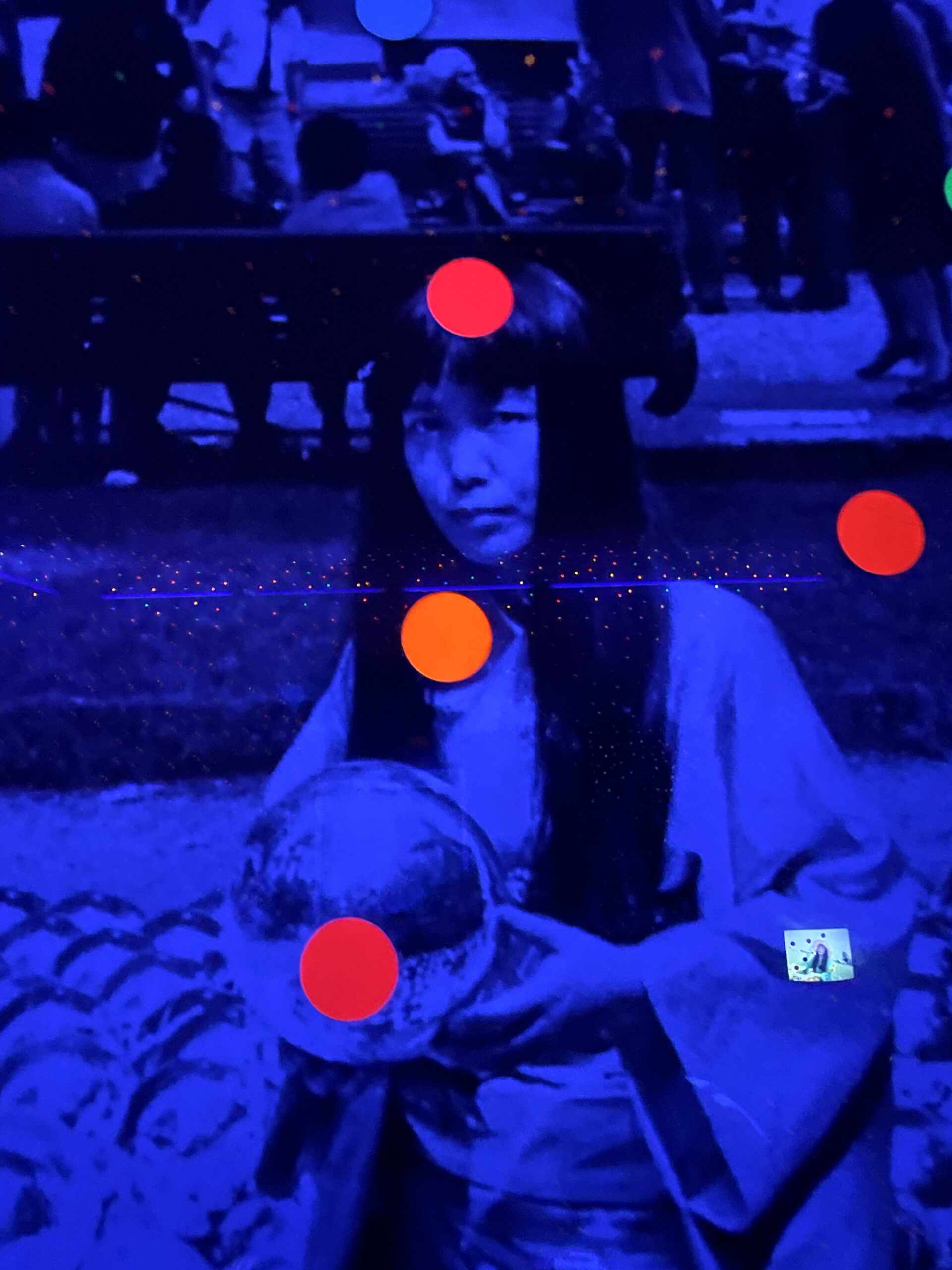
Yayoi Kusama, who died on 14 August 2026 at the age of 97, filled canvases with endless nets, covered objects with soft phallic forms, and multiplied dots across walls, bodies, and mirrored rooms. Making them was also a way to live with experiences that threatened to overwhelm her. In her autobiography, Kusama recalls seeing flowers speak and patterns spread across her surroundings and her body when she was a child. She began to draw what she saw. Years later, while painting her Infinity Nets in New York, she described how the nets seemed to escape the canvas, covering the room and even her skin. Repetition brought her close to what terrified her, while giving her a way to work with it. She could put on the canvas something that otherwise seemed to have no limit.
Her soft sculptures show another aspect of this work. Kusama sewed hundreds of phallic forms and attached them to chairs and other familiar objects. Their abundance might suggest fascination with sex, but Kusama explained that she made them because sexuality frightened her: reproducing these forms was her way of confronting that fear. She called the process “psychosomatic art”. By making and remaking the dots and nets, she could work with their intrusive force. Their proliferation could evoke a loss of the body’s imaginary consistency, which she called “self-obliteration”.
What function did this work have for Kusama? In his later teaching, Lacan used the term sinthome for a singular invention that can hold together the real, the symbolic, and the imaginary when their relation is disturbed. Its function lies in the arrangement it makes possible, rather than in the disappearance of the experiences that trouble the subject. Kusama gave a form, a place, and a rhythm to something that could otherwise invade both her body and her surroundings. Her repeated acts of making suggest a way of living with what persisted.
After returning to Japan, Kusama chose to live in a psychiatric hospital. For decades she travelled from there to a nearby studio to work. Her daily journey matters. The hospital offered care and a place to live; the studio gave her a place to continue making art. Together, they formed an arrangement in which institutional support and her artistic practice could coexist, even as the experiences that troubled her persisted.
Kusama also wrote poems in which death remains close, while love and art give voice to her wish to go on living. In a poem associated with her series Every Day I Pray for Love, she writes: “Life is beautiful. In responding to the reverberation of self-destruction, I wonder if I could live a day overcoming death, a whole day, today or a whole day tomorrow. Forever invisible, in the brilliance of life and death. I want to live until the end without taking my own life”. That wish had to be sustained in the face of something that persisted. The poem lends another meaning to the journey she made to her studio, day after day. A dot is a finite mark placed at a particular point. By placing one after another, Kusama gave form to what threatened to become boundless. Through painting, sculpture, and poetry, she found ways to work with experiences that did not cease to trouble her. There we can locate the singular function of her invention.
* Psychoanalyst member of Psychoanalyst member of the WAP and NEL. Practices psychoanalysis in Bogotá
Yayoi Kusama, who died on 14 August 2026 at the age of 97, filled canvases with endless nets, covered objects with soft phallic forms, and multiplied dots across walls, bodies, and mirrored rooms. Making them was also a way to live with experiences that threatened to overwhelm her. In her autobiography, Kusama recalls seeing flowers speak and patterns spread across her surroundings and her body when she was a child. She began to draw what she saw. Years later, while painting her Infinity Nets in New York, she described how the nets seemed to escape the canvas, covering the room and even her skin. Repetition brought her close to what terrified her, while giving her a way to work with it. She could put on the canvas something that otherwise seemed to have no limit.
Her soft sculptures show another aspect of this work. Kusama sewed hundreds of phallic forms and attached them to chairs and other familiar objects. Their abundance might suggest fascination with sex, but Kusama explained that she made them because sexuality frightened her: reproducing these forms was her way of confronting that fear. She called the process “psychosomatic art”. By making and remaking the dots and nets, she could work with their intrusive force. Their proliferation could evoke a loss of the body’s imaginary consistency, which she called “self-obliteration”.
What function did this work have for Kusama? In his later teaching, Lacan used the term sinthome for a singular invention that can hold together the real, the symbolic, and the imaginary when their relation is disturbed. Its function lies in the arrangement it makes possible, rather than in the disappearance of the experiences that trouble the subject. Kusama gave a form, a place, and a rhythm to something that could otherwise invade both her body and her surroundings. Her repeated acts of making suggest a way of living with what persisted.
After returning to Japan, Kusama chose to live in a psychiatric hospital. For decades she travelled from there to a nearby studio to work. Her daily journey matters. The hospital offered care and a place to live; the studio gave her a place to continue making art. Together, they formed an arrangement in which institutional support and her artistic practice could coexist, even as the experiences that troubled her persisted.
Kusama also wrote poems in which death remains close, while love and art give voice to her wish to go on living. In a poem associated with her series Every Day I Pray for Love, she writes: “Life is beautiful. In responding to the reverberation of self-destruction, I wonder if I could live a day overcoming death, a whole day, today or a whole day tomorrow. Forever invisible, in the brilliance of life and death. I want to live until the end without taking my own life”. That wish had to be sustained in the face of something that persisted. The poem lends another meaning to the journey she made to her studio, day after day. A dot is a finite mark placed at a particular point. By placing one after another, Kusama gave form to what threatened to become boundless. Through painting, sculpture, and poetry, she found ways to work with experiences that did not cease to trouble her. There we can locate the singular function of her invention.
* Psychoanalyst member of Psychoanalyst member of the WAP and NEL. Practices psychoanalysis in Bogotá