To listen

Tiny Interviews

Open Relationships

Marco Focchi*

FIRST QUESTION

Recently, in films, TV series, and public discourse, there has been increasing discussion about “open couples” or “open relationships.” The option of opening a couple’s relationship seems to appear more and more frequently in contemporary society. In your opinion, what does an open couple look for?

It seems to me that the phenomenon of the open couple or open relationship should first be understood against the backdrop of a broader transformation of social bonds, the world, and how we conceive individual freedom, even though this idea of an open relationship is not a particularly new feature in this era.

What has changed, however, is the meaning (of committed relationships and couples). Since the Enlightenment, for example, the significance of the social bond itself has gradually changed. The couple is no longer conceived as an institution to which people must conform, but as a construction that each individual should be able to define according to their own preferences. As the idea gains ground, more people believe that love is the only thing necessary to legitimize a marriage, and thus love becomes both what binds us to and singularizes a partner, but it also imposes a limit.

The open relationship emerges within this context. It can be seen as an attempt to preserve the benefits of the bond without accepting its limits, an attempt to maintain a stable relationship without giving up the other possibilities that life offers. In this regard, neoliberal ideology tends to make us believe that every sacrifice is an undue restriction, and that a successful life is one in which possibilities always remain open. Thus, the open couple may appear as a solution: the bond is preserved while trying not to sacrifice any possibility.

Naturally, not all open couples follow this logic. Nor can everything be attributed to neoliberalism. There were also the experiences of the communes of the 1960s, the years of the sexual revolution, which moved toward the free multiplication of relationships. Lacan himself noted that these experiments ultimately failed.

SECOND QUESTION

What interpretation can psychoanalysis offer regarding the choice to open the relationship, in a couple? From what perspectives can it be understood? Is it a defense, a fantasy, a solution? What place does love have in an open relationship?

If we start from psychoanalysis, we can ask what conception of the subject and of desire underlies the choice of an open relationship. As Freud taught us, a love relationship is composed of both a current of tenderness and a current of eroticism. Is it possible to separate the two?

I would say: of course it is possible. The bourgeois love triangle depicted in nineteenth-century novels is perhaps the clearest illustration of this, whether in a tragic or a comic form. The real question is whether it is possible to do so contractually, that is, to preserve the uniqueness of the love bond while freeing the multiplicity of erotic experience.

In contemporary culture, the individual is often conceived as the owner of themselves, of their preferences, and of their possibilities. This is a modern interpretation of freedom, understood as the individual having complete control over oneself and refusing to let any bond restrict the range of available options.

Yet this conception encounters a problem when it comes to love. To love someone means being part of a relationship in which we are exposed to contingency. We access love through lack: through missing someone. As the saying goes, “It is because I miss you that I desire you.” It is through the other’s absence, not through control or mastery, that desire emerges.

We cannot guarantee in advance what we will feel, nor can we decide beforehand what an encounter with another person will come to mean for us.

A certain contemporary representation of the couple seems to want to transform even the bond of love into a system of negotiable rules, as though one could define in advance the conditions under which no one would ever feel limited or hurt.

The fact is that love can bring both the greatest joy and the greatest suffering, because nothing is more painful than unrequited love. But is that a reason not to enter into it?

On this point, psychoanalysis has something important to say. The subject does not coincide with the conscious individual who declares their preferences. Desire is not a simple thing that can be satisfied by offering enough possibilities. It is not certain that multiplying options enhances desire, nor that eliminating constraints makes us freer.

As for love, today there is an effort not to equate it with possession, a concern reinforced by daily news and by issues such as domestic violence and femicide. Yet love singularizes: “I want you because you are you.” I would not think that the truth of love consists in removing every limit. Love puts into play the place that the other occupies for us, and that place is not regulated by social conventions.

In the background, however, there remains the great problem of the divergence between love and jouissance. Traditionally, this has been experienced more acutely by the male side of the couple, but today it is widely present among women as well. The question is whether openness is a choice that two subjects can genuinely sustain, or whether it becomes the expression of a contemporary imperative: never miss out on anything, never renounce anything, never depend on anyone.

THIRD QUESTION

Can we already offer an initial interpretation of this new configuration?

I believe it is possible to attempt an interpretation of the new form of bond proposed by the open relationship by connecting it to the spread of an individualistic model in which freedom is identified with the ability to choose without constraints. The individual is called upon to be the author of their own life, to construct their own identity, and to define their relationships autonomously.

The love bond itself thus tends to be conceived as an individual project, to be maintained for as long as it corresponds to one’s expectations. Yet this model contains a contradiction. On one hand, the relationship is expected to provide stability, recognition, and security. On the other hand, one wishes to avoid any limitation of personal freedom that it might entail. The ideal would be to have a relationship that requires no renunciation or commitment, that does not call one’s autonomy into question, and that does not restrict future possibilities.

The open couple may therefore become a particularly revealing expression of this contradiction: an attempt to preserve the bond while simultaneously safeguarding individual independence.

However, the issue cannot be resolved simply by establishing different rules. The problem is more general. It concerns the way we conceive the relationship between freedom and bond. There is, moreover, a paradox at work here: a culture that encourages each individual to free themselves from constraints can end up transforming freedom itself into an obligation. One must be autonomous, open to experiences, capable of managing emotions, negotiating boundaries, and avoiding entrapment in forms of relationship regarded as outdated.

In this way, a legitimate possibility risks becoming a new norm.

The point is not to long nostalgically for the traditional couple, nor to defend exclusivity at all costs. Much depends on temperament and subjective disposition. Rather, psychoanalysis can show that no form of relationship protects us from the contradictions of desire, and that no engineering of human bonds can abolish the dimension of the unconscious and the surprises it continues to hold in store for us.

FOURTH QUESTION

In your clinical experience, have patients living as an open couple, that is, without the constraint of exclusivity between partners, actually “resolved” anything? Can you predict how these experiments of open relationships tend to end? Is an open relationship one of the many possible viable options that patients consider today?

When it comes to the outcomes of open relationships, I do not believe it is possible to make general predictions. Simply because we cannot deduce a relationship’s destiny from its form (open or exclusive) alone.

What interests psychoanalysis is not determining whether an open relationship works better or worse than an exclusive one, but understanding what each subject is seeking in the bond and what meaning the possibility of opening it assumes for them.

Patients often come in analysis when the mechanism of the open couple begins to falter, revealing that jealousy is not merely a cultural residue to be overcome but touches the very core of the relationship to what we experience as precious and irreplaceable.

I have seen couples in which becoming open meant that one partner passively accepted, and in a certain sense endured, the demands of the other for fear of losing them, thereby suppressing their own emotional needs. And I have seen open couples in which, amid a multiplicity of encounters, one person eventually became special and love emerged. New love is the great unknown of the open couple, much more than the multiplication of erotic encounters.

Some couples succeed quite well in separating love from jouissance, and this is nothing new. For example, in the Bloomsbury Group at the beginning of the twentieth century, its members experimented with unconventional forms of cohabitation, extramarital relationships, and sexual freedom, challenging the moral codes of the Victorian age.

What is interesting, however, is that today this option has entered the repertoire of ways of life that can be imagined and discussed. The patient no longer brings only the problem of an affair or a transgression. They may also bring the project of a relationship in which exclusivity is not expected. This changes the way the question is formulated. What once appeared as a violation of the rule can now be conceived as a new rule, an alternative rule.

What remains to be seen is what happens when an abstract possibility becomes a concrete experience, because moving from phantasma to reality can have unpredictable effects.

An agreement can define what is permitted, but it cannot determine in advance what effects an encounter with another partner will have, whether it will arouse jealousy, what place the new bond will assume, or how it will transform the relationship between the original partners.

The freedom to choose the rules is not equivalent to the ability to determine everything that will happen. For this reason, I would distinguish the practice of the open couple from the resolution, or even simply the transformation, of the problem of desire.

A couple may find, through openness, an arrangement that allows the relationship to continue. But this does not mean that the questions that run through every love relationship have disappeared: dependency, rivalry, loss, desire, and one’s relation to the other.

Can we say that the open couple works better than the bourgeois love triangle portrayed in nineteenth-century novels? I would not know how to answer.

What is interesting, however, is that another theme is now coming increasingly into view: polyamory. Polyamory is not simply the multiplication of sexual relationships while preserving the uniqueness of love. It goes further than that. In a sense, it is more daring, because it calls into question precisely this final point: the uniqueness of love itself. Is there a world of parallel loves? Some people are trying to find out.

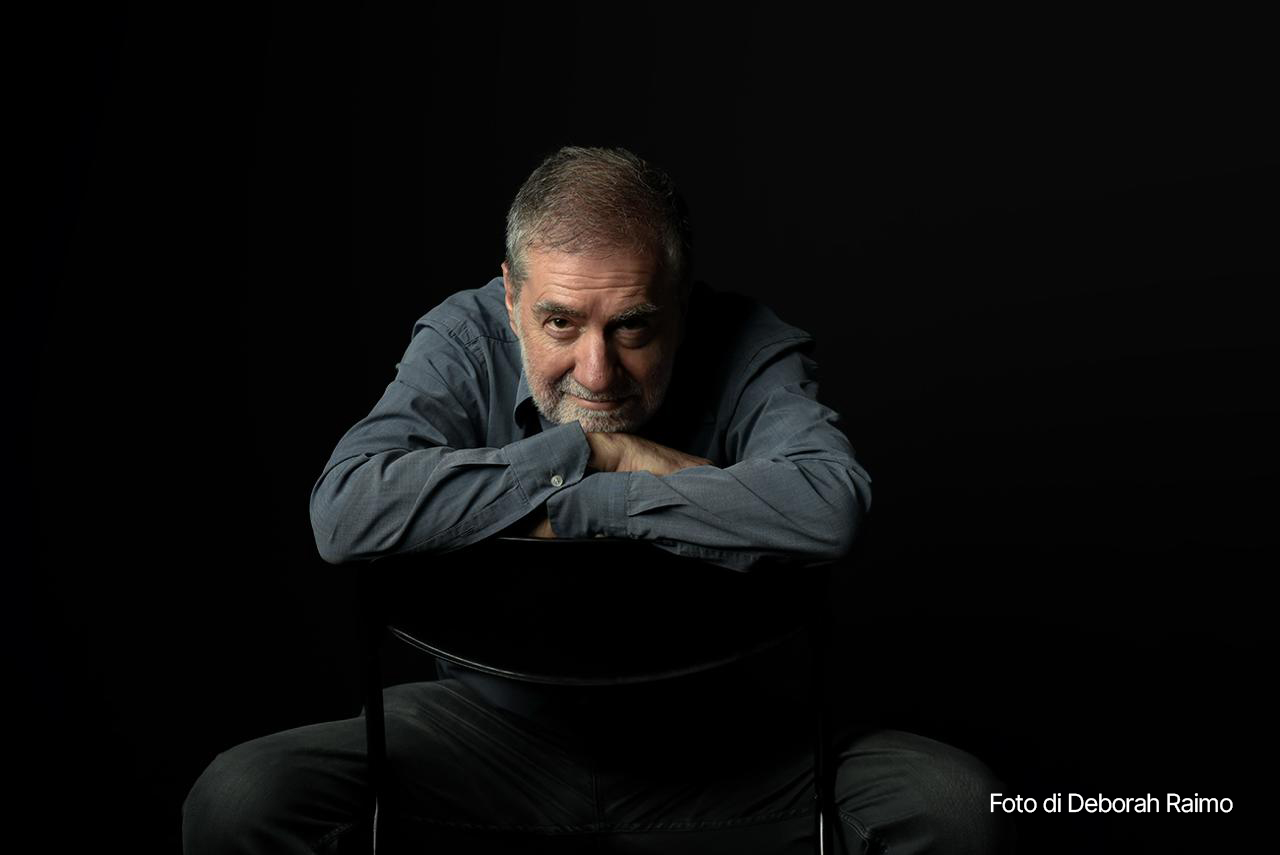
* Psychoanalyst member of the WAP and SLP. Practices psychoanalysis in Milán.

FIRST QUESTION

Recently, in films, TV series, and public discourse, there has been increasing discussion about “open couples” or “open relationships.” The option of opening a couple’s relationship seems to appear more and more frequently in contemporary society. In your opinion, what does an open couple look for?

It seems to me that the phenomenon of the open couple or open relationship should first be understood against the backdrop of a broader transformation of social bonds, the world, and how we conceive individual freedom, even though this idea of an open relationship is not a particularly new feature in this era.

What has changed, however, is the meaning (of committed relationships and couples). Since the Enlightenment, for example, the significance of the social bond itself has gradually changed. The couple is no longer conceived as an institution to which people must conform, but as a construction that each individual should be able to define according to their own preferences. As the idea gains ground, more people believe that love is the only thing necessary to legitimize a marriage, and thus love becomes both what binds us to and singularizes a partner, but it also imposes a limit.

The open relationship emerges within this context. It can be seen as an attempt to preserve the benefits of the bond without accepting its limits, an attempt to maintain a stable relationship without giving up the other possibilities that life offers. In this regard, neoliberal ideology tends to make us believe that every sacrifice is an undue restriction, and that a successful life is one in which possibilities always remain open. Thus, the open couple may appear as a solution: the bond is preserved while trying not to sacrifice any possibility.

Naturally, not all open couples follow this logic. Nor can everything be attributed to neoliberalism. There were also the experiences of the communes of the 1960s, the years of the sexual revolution, which moved toward the free multiplication of relationships. Lacan himself noted that these experiments ultimately failed.

SECOND QUESTION

What interpretation can psychoanalysis offer regarding the choice to open the relationship, in a couple? From what perspectives can it be understood? Is it a defense, a fantasy, a solution? What place does love have in an open relationship?

If we start from psychoanalysis, we can ask what conception of the subject and of desire underlies the choice of an open relationship. As Freud taught us, a love relationship is composed of both a current of tenderness and a current of eroticism. Is it possible to separate the two?

I would say: of course it is possible. The bourgeois love triangle depicted in nineteenth-century novels is perhaps the clearest illustration of this, whether in a tragic or a comic form. The real question is whether it is possible to do so contractually, that is, to preserve the uniqueness of the love bond while freeing the multiplicity of erotic experience.

In contemporary culture, the individual is often conceived as the owner of themselves, of their preferences, and of their possibilities. This is a modern interpretation of freedom, understood as the individual having complete control over oneself and refusing to let any bond restrict the range of available options.

Yet this conception encounters a problem when it comes to love. To love someone means being part of a relationship in which we are exposed to contingency. We access love through lack: through missing someone. As the saying goes, “It is because I miss you that I desire you.” It is through the other’s absence, not through control or mastery, that desire emerges.

We cannot guarantee in advance what we will feel, nor can we decide beforehand what an encounter with another person will come to mean for us.

A certain contemporary representation of the couple seems to want to transform even the bond of love into a system of negotiable rules, as though one could define in advance the conditions under which no one would ever feel limited or hurt.

The fact is that love can bring both the greatest joy and the greatest suffering, because nothing is more painful than unrequited love. But is that a reason not to enter into it?

On this point, psychoanalysis has something important to say. The subject does not coincide with the conscious individual who declares their preferences. Desire is not a simple thing that can be satisfied by offering enough possibilities. It is not certain that multiplying options enhances desire, nor that eliminating constraints makes us freer.

As for love, today there is an effort not to equate it with possession, a concern reinforced by daily news and by issues such as domestic violence and femicide. Yet love singularizes: “I want you because you are you.” I would not think that the truth of love consists in removing every limit. Love puts into play the place that the other occupies for us, and that place is not regulated by social conventions.

In the background, however, there remains the great problem of the divergence between love and jouissance. Traditionally, this has been experienced more acutely by the male side of the couple, but today it is widely present among women as well. The question is whether openness is a choice that two subjects can genuinely sustain, or whether it becomes the expression of a contemporary imperative: never miss out on anything, never renounce anything, never depend on anyone.

THIRD QUESTION

Can we already offer an initial interpretation of this new configuration?

I believe it is possible to attempt an interpretation of the new form of bond proposed by the open relationship by connecting it to the spread of an individualistic model in which freedom is identified with the ability to choose without constraints. The individual is called upon to be the author of their own life, to construct their own identity, and to define their relationships autonomously.

The love bond itself thus tends to be conceived as an individual project, to be maintained for as long as it corresponds to one’s expectations. Yet this model contains a contradiction. On one hand, the relationship is expected to provide stability, recognition, and security. On the other hand, one wishes to avoid any limitation of personal freedom that it might entail. The ideal would be to have a relationship that requires no renunciation or commitment, that does not call one’s autonomy into question, and that does not restrict future possibilities.

The open couple may therefore become a particularly revealing expression of this contradiction: an attempt to preserve the bond while simultaneously safeguarding individual independence.

However, the issue cannot be resolved simply by establishing different rules. The problem is more general. It concerns the way we conceive the relationship between freedom and bond. There is, moreover, a paradox at work here: a culture that encourages each individual to free themselves from constraints can end up transforming freedom itself into an obligation. One must be autonomous, open to experiences, capable of managing emotions, negotiating boundaries, and avoiding entrapment in forms of relationship regarded as outdated.

In this way, a legitimate possibility risks becoming a new norm.

The point is not to long nostalgically for the traditional couple, nor to defend exclusivity at all costs. Much depends on temperament and subjective disposition. Rather, psychoanalysis can show that no form of relationship protects us from the contradictions of desire, and that no engineering of human bonds can abolish the dimension of the unconscious and the surprises it continues to hold in store for us.

FOURTH QUESTION

In your clinical experience, have patients living as an open couple, that is, without the constraint of exclusivity between partners, actually “resolved” anything? Can you predict how these experiments of open relationships tend to end? Is an open relationship one of the many possible viable options that patients consider today?

When it comes to the outcomes of open relationships, I do not believe it is possible to make general predictions. Simply because we cannot deduce a relationship’s destiny from its form (open or exclusive) alone.

What interests psychoanalysis is not determining whether an open relationship works better or worse than an exclusive one, but understanding what each subject is seeking in the bond and what meaning the possibility of opening it assumes for them.

Patients often come in analysis when the mechanism of the open couple begins to falter, revealing that jealousy is not merely a cultural residue to be overcome but touches the very core of the relationship to what we experience as precious and irreplaceable.

I have seen couples in which becoming open meant that one partner passively accepted, and in a certain sense endured, the demands of the other for fear of losing them, thereby suppressing their own emotional needs. And I have seen open couples in which, amid a multiplicity of encounters, one person eventually became special and love emerged. New love is the great unknown of the open couple, much more than the multiplication of erotic encounters.

Some couples succeed quite well in separating love from jouissance, and this is nothing new. For example, in the Bloomsbury Group at the beginning of the twentieth century, its members experimented with unconventional forms of cohabitation, extramarital relationships, and sexual freedom, challenging the moral codes of the Victorian age.

What is interesting, however, is that today this option has entered the repertoire of ways of life that can be imagined and discussed. The patient no longer brings only the problem of an affair or a transgression. They may also bring the project of a relationship in which exclusivity is not expected. This changes the way the question is formulated. What once appeared as a violation of the rule can now be conceived as a new rule, an alternative rule.

What remains to be seen is what happens when an abstract possibility becomes a concrete experience, because moving from phantasma to reality can have unpredictable effects.

An agreement can define what is permitted, but it cannot determine in advance what effects an encounter with another partner will have, whether it will arouse jealousy, what place the new bond will assume, or how it will transform the relationship between the original partners.

The freedom to choose the rules is not equivalent to the ability to determine everything that will happen. For this reason, I would distinguish the practice of the open couple from the resolution, or even simply the transformation, of the problem of desire.

A couple may find, through openness, an arrangement that allows the relationship to continue. But this does not mean that the questions that run through every love relationship have disappeared: dependency, rivalry, loss, desire, and one’s relation to the other.

Can we say that the open couple works better than the bourgeois love triangle portrayed in nineteenth-century novels? I would not know how to answer.

What is interesting, however, is that another theme is now coming increasingly into view: polyamory. Polyamory is not simply the multiplication of sexual relationships while preserving the uniqueness of love. It goes further than that. In a sense, it is more daring, because it calls into question precisely this final point: the uniqueness of love itself. Is there a world of parallel loves? Some people are trying to find out.
* Psychoanalyst member of the WAP and SLP. Practices psychoanalysis in Milán.

READ NEXT