To listen

Freud and Lacan in the World

The last Freud´s lapsus. I PART

Interview with Daniela Finzi by Markus Zöchmeister*

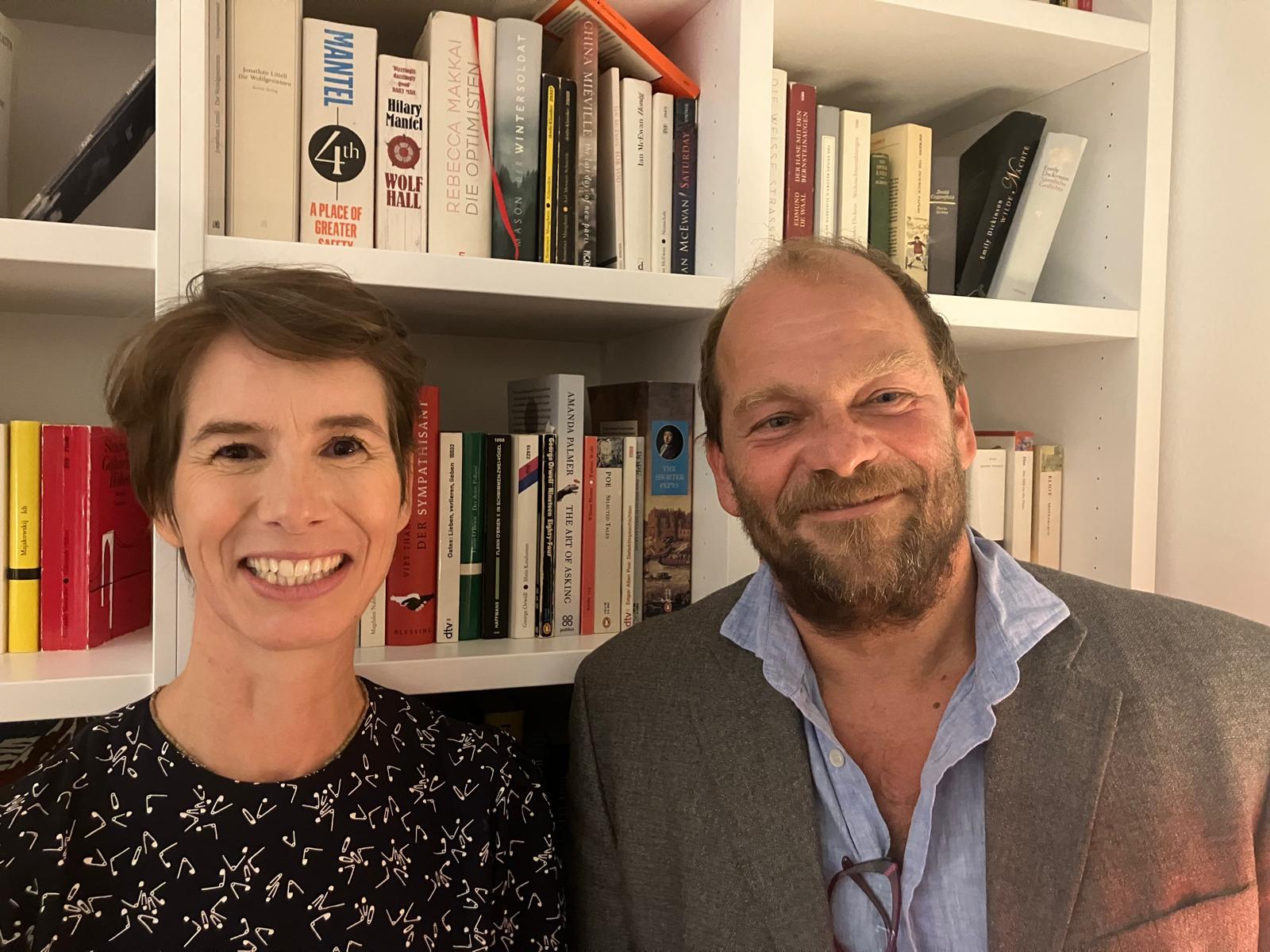
This audio recording is from an exclusive interview for the AMP-WAP Blog that Daniela Finzi, Research Director at the Sigmund Freud Museum in Vienna, conducted with Markus Zöchmeister, a psychoanalyst and member of the WAP and the NLS.

In 2026, Daniela Finzi conducted historical research and curatorial work at the Sigmund Freud Museum in Vienna, focusing on the Nazi persecution of the Freud family, the expropriation of their property, and the tragic fate of Sigmund Freud’ sisters.

This research incorporates original, previously unpublished documentation of invaluable historical significance, including a letter in which Sigmund Freud writes to Marie Bonaparte to request help for his four sisters who remained in Austria.

Written during his exile in London, this brief note, in which Freud makes a slip of the pen, provides a moving documentary record of his concern for them at a time of extreme vulnerability.

This brief note, in which Freud makes a slip of the pen, was written while he was already in exile in London, and constitutes a moving documentary record of his concern for them at a time of extreme vulnerability.

This interview, which Daniela kindly granted to the AMP-WAP BLOG took place at the S. Freud Museum in Vienna on Wednesday, September 23, 2026.

AMP/WAP Blog: First, I want to thank you very much for so readily agreeing to this interview about the Sigmund Freud museum in Vienna, where you have been the academic director for so many years. The museum is more than just housing permanent and special exhibitions in the former living and working quarters of Sigmund Freud and his family at Berggasse 19, the museum has an extensive image archive, a digital archive, and several substantial estates, all of which are freely accessible. It houses Europe’s largest library on psychoanalysis and organizes academic events such as the Sigmund Freud lectures, to name just a few key areas of its work.

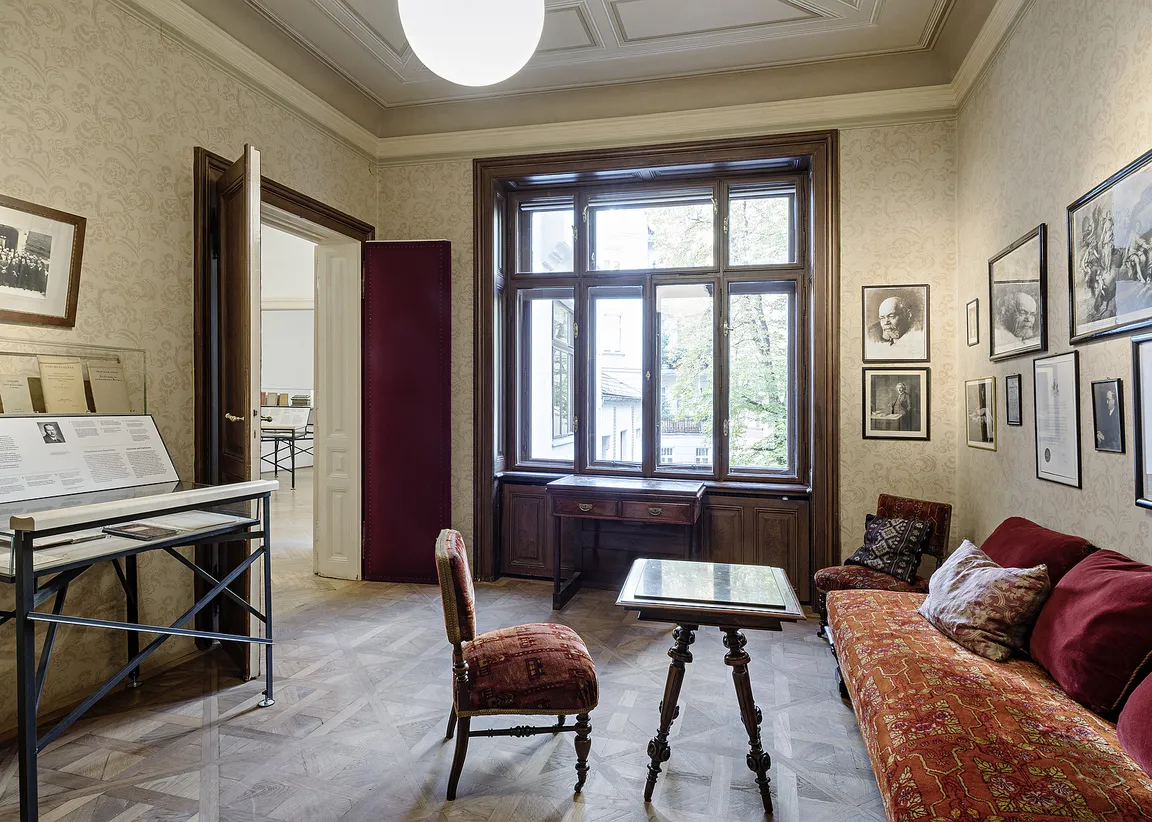
We are sitting here at Berggasse 19, on the upper floor, where you have many things stored. Before we started the interview, you told me that we are sitting right in the Freuds’ living room, where he described the fort-da game.

Daniela Finzi: It’s the fort-da game of his grandson, Ernst. In Beyond the Pleasure Principle, there is a footnote in which Freud tells readers that Ernst also plays Fort-da by hiding himself and reappearing in a mirror that extends to the floor. This is the mirror. In German, it’s even called a Psyche, which is wonderful, too.

AMP/WAP Blog: Yes.

Daniela Finzi: We are here with the Psyche, at the origin of psychoanalysis, which is quite impressive.

AMP/WAP Blog: It is. The conversation we are having today will appear in the first issue of the World Association of Psychoanalysis’s new blog. We will speak about the work of the Sigmund Freud Museum in Vienna, particularly the current special exhibition. The Case of Freud: Documents of Injustice, which will be on display until November 9, 2026-presumably not a date chosen at random.

Daniela Finzi: You are right. We chose this date very carefully because November 9 marks the so-called Reichskristallnacht, the pogroms against the Jewish population, including here in Vienna. But the good news for our listeners is that we have decided to extend the exhibition until the beginning of April 2027. It will therefore remain on display for another half year.

AMP/WAP Blog: That’s great. Let’s turn to the special exhibition. The case of Freud´s documents of injustice. Drawing on new sources made available to the museum it sheds light on the dispossession of Sigmund Freud and his younger brother Alexander Freud, the disenfranchisement of the entire Freud family and the extermination of the four sisters of Freud, Rosa Graf, Maria Freud, Adolfine Freud and Paulina Winternitz.

The exhibition source material consists of over a thousand files, documents, business letters and lists from the archives of the Sigmund Freud museum. Documentation of the Freuds´ disenfranchisement compiled by the perpetrators, the nazi´s officials Erich Führer and Anton Sauerwald. What significance do the various lists and the practice of compiling lists hold in this exhibition?

Daniela Finzi: Yeah, you already mentioned that there were thousands of documents, different documents, documents which had been collected by the Nazis themselves, but also documents which were collected by the family members, letters that survived. All that, thanks to the world-famous name of Freud.

So, these things were conserved in public archives. And for me and my colleague Johanna Frey -we were curating the exhibition together- it became very soon clear that we needed some red lines, because there were so many different documents and that there were lists all over.

And then we had the idea of being even more interested in this list. We do have lists, very innocent lists, for instance, Freud’s so-called shortest chronicle. It’s his diary. It’s just a list of dates.

In March 1938, he would just note Phineas Austria with the day of the Anschluss, and then we do have a lot of lists regarding the personal belongings of the Freuds. This is something very new which nobody in Freud’s research knew before this. Iit’s a long story to talk about the list. But it was just to say that this is something which we could purchase some years ago, and for me it was absolutely moving to see all these belongings. And this is because the Nazis are not only interested in the personal belongings and money, it’s also about extermination, and even before, it’s about apartments and so we do have lists of houses. In this case, the four sisters of Freud were placed in shared apartments. Because they didn’t come together or live together willingli. They were obliged; Jewish tenants lost their tenant rights very soon after the Anschluss. We do have these lists and then we do have the lists of deportation in the case of the Freud sisters.

So, by means of the lists which we put on the wall, whereas the other documents are in display cases, we created a kind of principle of organization to structure these, thousands and thousands, of documents where we just see how…

I don’t know, but the Nazis, they recorded or checked everything, and everything is documented. And everything is based on injustice. But for every single act of dispossessing and discrimination, there is a law as if this were allowed. This is really… It’s very impressive, and it was crucial for us to have access to these family letters. The letters of the four sisters who stayed in Vienna, and to get an idea how they experienced this situation and how they wrote about it, because in the Nazi documents you just have numbers.

And you maybe have the name of a person, but everything else disappears behind the professional number.

………………………………………………………………………………………………………………..

AMP/WAP Blog: On 12th November 1938, immediately after the November pogroms, Sigmund Freud wrote her (Marie Bonaparte): I quote that the latest horrible events in Germany tighten the problem of what is to do with the four elderly women aged between 75 and 80. It’s beyond our power to secure their safety in England. The fortune we have left them, upon our departure, is some 160000 Austrian’s shillings, may already have been confiscated and will certainly be lost. If they leave, we are considering a stay on the French Riviera in Nice or nearby. But will that be possible?

Daniela Finzi: After Bonaparte assured him of support for his departure, Freud sent her a card. This card is once again a list.

AMP/WAP Blog: What is so special about this card? Can you tell us about it?

Daniela Finzi: Yeah, for me, this is the most important, insightful, and moving document of the whole exhibition. It’s, again, a list, and maybe it was becuse we already had in mind that we realized that lists were crucial. It’s a list of Freud’s very clear, beautiful handwriting. Just a list of names of his sisters. Their marital status: widowed or unmarried, and the date of birth. The information Marie Bonaparte asked him to send, and he does so immediately.

We are really one week after November pogroms, when the family realizes that money or not, the sisters are no longer sure.

And even then Freud is active, participating in this.

The discussion is about what to do with the sisters, as we see with these letters with Bonaparte. But what we also see, and this is the most moving thing, is on this list by indicating the dates of birth four times there is, to call it as Freud would, A Freudian slip!

Because all the sisters who are born in: 1860, 1861, 1862, 1863; are erroneously described in the letter as being  born in the 20th century,1960, 1961, 1962, 1963. On its slip of the pen four times, we discovered it in a footnote. You know the letters between Bonaparte and Freud had been published in France some years ago and there is now the German version coming out next year, by Turia + Kant editorial which is also the publishing company of Lacan here in Austria.

But when we organized the exhibition it didn´t exist translated in German yet and I had read it in French of course. And there is one footnote about that there is a mistake with dates. And then I was contacting the Library of Congress in Washington and wanted to see how Freud had written this, I received this beautiful card with four times the wrong number.

AMP/WAP Blog: Wow!!!

Daniela Finzi: And we can only speculate about it, but for me it’s clear that there is the unconscious desire that Freud wants his sisters to be born in later times when all this will be over.

AMP/WAP Blog: We might say that’s a truly Freudian interpretation of the Freudian slip. Because in his book: Psychopathology of Everyday Life, Freud lists examples of slips of the pen as a subcategory of the slip of the tongue. The first example he gives there is a personal one of Freud himself, in which Freud makes the very same mistake whilst writing a date, shifting the date into the future. And Freud interprets his own slip of the pen as anticipation of a wish being fulfilled. So, if we follow this interpretation, it confronts us with the impossible, the bending of chronological time. And nevertheless, isn’t it astonishing that this slip of the pen repeated four times?

Daniela Finzi: Absolutely. I see Freud writing the first name and the first date. Having this slip and then again, and again, and again. It must have been a very strong wish.

I don’t know. It’s just really… Freud is fascinated by figures, and we know it from his letters many decades before with Wilhelm Fliess.

AMP/WAP Blog: Yeah

Daniela Finzi: And it’s really a highlight of the exhibition. It’s a very small document, but for me it’s the most…

AMP/WAP Blog: It’s over-determined. We can read in several places in his work that Freud draws attention to the fact that slips have a contagious nature. They go viral, as we would say today.

…………………………………………………………………………………………………………

AMP/WAP Blog: About these four times, the slip repeated four times, it reminds me that Freud himself speaks variously in several places in his work about the contagious nature of the unconscious and of a slip. So we can say a slip never comes alone.

Daniela Finzi: Yes, I have to say that I can prove it, because I only discovered it some weeks ago, when the exhibition had already been on display for many months. I had already shown it to our dear president Alexander Van der Bellen which was a great honor, and I showed him the list of Freud’s slips. Some weeks later I showed it to a friend of mine, and she did not only look at the list but also at the text label next to it. In my German text label, I was writing about in German, I would say “falsche datierung” to the wrong date but I wrote in German. I turned two letters and from the word falsche -incorrect-, to flasche and it became the word for bottle, flaschen datierung so it’s really the word flashe,bottle. When you say that we could say it goes viral, I can really prove it. There must have been something else in my own unconscious mind which made me do that.

It’s this contagious nature of the slip of the unconscious that goes from one unconscious to the next and it’s the way how psychoanalysis spreads all over the world.

*Psychoanalyst member of the WAP and NLS. Practices psychoanalysis in Vienna

This audio recording is from an exclusive interview for the AMP-WAP Blog that Daniela Finzi, Research Director at the Sigmund Freud Museum in Vienna, conducted with Markus Zöchmeister, a psychoanalyst and member of the WAP and the NLS.

In 2026, Daniela Finzi conducted historical research and curatorial work at the Sigmund Freud Museum in Vienna, focusing on the Nazi persecution of the Freud family, the expropriation of their property, and the tragic fate of Sigmund Freud’ sisters.

This research incorporates original, previously unpublished documentation of invaluable historical significance, including a letter in which Sigmund Freud writes to Marie Bonaparte to request help for his four sisters who remained in Austria.

Written during his exile in London, this brief note, in which Freud makes a slip of the pen, provides a moving documentary record of his concern for them at a time of extreme vulnerability.

This brief note, in which Freud makes a slip of the pen, was written while he was already in exile in London, and constitutes a moving documentary record of his concern for them at a time of extreme vulnerability.

This interview, which Daniela kindly granted to the AMP-WAP BLOG took place at the S. Freud Museum in Vienna on Wednesday, September 23, 2026.

AMP/WAP Blog: First, I want to thank you very much for so readily agreeing to this interview about the Sigmund Freud museum in Vienna, where you have been the academic director for so many years. The museum is more than just housing permanent and special exhibitions in the former living and working quarters of Sigmund Freud and his family at Berggasse 19, the museum has an extensive image archive, a digital archive, and several substantial estates, all of which are freely accessible. It houses Europe’s largest library on psychoanalysis and organizes academic events such as the Sigmund Freud lectures, to name just a few key areas of its work.

We are sitting here at Berggasse 19, on the upper floor, where you have many things stored. Before we started the interview, you told me that we are sitting right in the Freuds’ living room, where he described the fort-da game.

Daniela Finzi: It’s the fort-da game of his grandson, Ernst. In Beyond the Pleasure Principle, there is a footnote in which Freud tells readers that Ernst also plays Fort-da by hiding himself and reappearing in a mirror that extends to the floor. This is the mirror. In German, it’s even called a Psyche, which is wonderful, too.

AMP/WAP Blog: Yes.

Daniela Finzi: We are here with the Psyche, at the origin of psychoanalysis, which is quite impressive.

AMP/WAP Blog: It is. The conversation we are having today will appear in the first issue of the World Association of Psychoanalysis’s new blog. We will speak about the work of the Sigmund Freud Museum in Vienna, particularly the current special exhibition. The Case of Freud: Documents of Injustice, which will be on display until November 9, 2026-presumably not a date chosen at random.

Daniela Finzi: You are right. We chose this date very carefully because November 9 marks the so-called Reichskristallnacht, the pogroms against the Jewish population, including here in Vienna. But the good news for our listeners is that we have decided to extend the exhibition until the beginning of April 2027. It will therefore remain on display for another half year.

AMP/WAP Blog: That’s great. Let’s turn to the special exhibition. The case of Freud´s documents of injustice. Drawing on new sources made available to the museum it sheds light on the dispossession of Sigmund Freud and his younger brother Alexander Freud, the disenfranchisement of the entire Freud family and the extermination of the four sisters of Freud, Rosa Graf, Maria Freud, Adolfine Freud and Paulina Winternitz.

The exhibition source material consists of over a thousand files, documents, business letters and lists from the archives of the Sigmund Freud museum. Documentation of the Freuds´ disenfranchisement compiled by the perpetrators, the nazi´s officials Erich Führer and Anton Sauerwald. What significance do the various lists and the practice of compiling lists hold in this exhibition?

Daniela Finzi: Yeah, you already mentioned that there were thousands of documents, different documents, documents which had been collected by the Nazis themselves, but also documents which were collected by the family members, letters that survived. All that, thanks to the world-famous name of Freud.

So, these things were conserved in public archives. And for me and my colleague Johanna Frey -we were curating the exhibition together- it became very soon clear that we needed some red lines, because there were so many different documents and that there were lists all over.

And then we had the idea of being even more interested in this list. We do have lists, very innocent lists, for instance, Freud’s so-called shortest chronicle. It’s his diary. It’s just a list of dates.

In March 1938, he would just note Phineas Austria with the day of the Anschluss, and then we do have a lot of lists regarding the personal belongings of the Freuds. This is something very new which nobody in Freud’s research knew before this. Iit’s a long story to talk about the list. But it was just to say that this is something which we could purchase some years ago, and for me it was absolutely moving to see all these belongings. And this is because the Nazis are not only interested in the personal belongings and money, it’s also about extermination, and even before, it’s about apartments and so we do have lists of houses. In this case, the four sisters of Freud were placed in shared apartments. Because they didn’t come together or live together willingli. They were obliged; Jewish tenants lost their tenant rights very soon after the Anschluss. We do have these lists and then we do have the lists of deportation in the case of the Freud sisters.

So, by means of the lists which we put on the wall, whereas the other documents are in display cases, we created a kind of principle of organization to structure these, thousands and thousands, of documents where we just see how…

I don’t know, but the Nazis, they recorded or checked everything, and everything is documented. And everything is based on injustice. But for every single act of dispossessing and discrimination, there is a law as if this were allowed. This is really… It’s very impressive, and it was crucial for us to have access to these family letters. The letters of the four sisters who stayed in Vienna, and to get an idea how they experienced this situation and how they wrote about it, because in the Nazi documents you just have numbers.

And you maybe have the name of a person, but everything else disappears behind the professional number.

………………………………………………………………………………………………………………..

AMP/WAP Blog: On 12th November 1938, immediately after the November pogroms, Sigmund Freud wrote her (Marie Bonaparte): I quote that the latest horrible events in Germany tighten the problem of what is to do with the four elderly women aged between 75 and 80. It’s beyond our power to secure their safety in England. The fortune we have left them, upon our departure, is some 160000 Austrian’s shillings, may already have been confiscated and will certainly be lost. If they leave, we are considering a stay on the French Riviera in Nice or nearby. But will that be possible?

Daniela Finzi: After Bonaparte assured him of support for his departure, Freud sent her a card. This card is once again a list.

AMP/WAP Blog: What is so special about this card? Can you tell us about it?

Daniela Finzi: Yeah, for me, this is the most important, insightful, and moving document of the whole exhibition. It’s, again, a list, and maybe it was becuse we already had in mind that we realized that lists were crucial. It’s a list of Freud’s very clear, beautiful handwriting. Just a list of names of his sisters. Their marital status: widowed or unmarried, and the date of birth. The information Marie Bonaparte asked him to send, and he does so immediately.

We are really one week after November pogroms, when the family realizes that money or not, the sisters are no longer sure.

And even then Freud is active, participating in this.

The discussion is about what to do with the sisters, as we see with these letters with Bonaparte. But what we also see, and this is the most moving thing, is on this list by indicating the dates of birth four times there is, to call it as Freud would, A Freudian slip!

Because all the sisters who are born in: 1860, 1861, 1862, 1863; are erroneously described in the letter as being  born in the 20th century,1960, 1961, 1962, 1963. On its slip of the pen four times, we discovered it in a footnote. You know the letters between Bonaparte and Freud had been published in France some years ago and there is now the German version coming out next year, by Turia + Kant editorial which is also the publishing company of Lacan here in Austria.

But when we organized the exhibition it didn´t exist translated in German yet and I had read it in French of course. And there is one footnote about that there is a mistake with dates. And then I was contacting the Library of Congress in Washington and wanted to see how Freud had written this, I received this beautiful card with four times the wrong number.

AMP/WAP Blog: Wow!!!

Daniela Finzi: And we can only speculate about it, but for me it’s clear that there is the unconscious desire that Freud wants his sisters to be born in later times when all this will be over.

AMP/WAP Blog: We might say that’s a truly Freudian interpretation of the Freudian slip. Because in his book: Psychopathology of Everyday Life, Freud lists examples of slips of the pen as a subcategory of the slip of the tongue. The first example he gives there is a personal one of Freud himself, in which Freud makes the very same mistake whilst writing a date, shifting the date into the future. And Freud interprets his own slip of the pen as anticipation of a wish being fulfilled. So, if we follow this interpretation, it confronts us with the impossible, the bending of chronological time. And nevertheless, isn’t it astonishing that this slip of the pen repeated four times?

Daniela Finzi: Absolutely. I see Freud writing the first name and the first date. Having this slip and then again, and again, and again. It must have been a very strong wish.

I don’t know. It’s just really… Freud is fascinated by figures, and we know it from his letters many decades before with Wilhelm Fliess.

AMP/WAP Blog: Yeah

Daniela Finzi: And it’s really a highlight of the exhibition. It’s a very small document, but for me it’s the most…

AMP/WAP Blog: It’s over-determined. We can read in several places in his work that Freud draws attention to the fact that slips have a contagious nature. They go viral, as we would say today.

…………………………………………………………………………………………………………

AMP/WAP Blog: About these four times, the slip repeated four times, it reminds me that Freud himself speaks variously in several places in his work about the contagious nature of the unconscious and of a slip. So we can say a slip never comes alone.

Daniela Finzi: Yes, I have to say that I can prove it, because I only discovered it some weeks ago, when the exhibition had already been on display for many months. I had already shown it to our dear president Alexander Van der Bellen which was a great honor, and I showed him the list of Freud’s slips. Some weeks later I showed it to a friend of mine, and she did not only look at the list but also at the text label next to it. In my German text label, I was writing about in German, I would say “falsche datierung” to the wrong date but I wrote in German. I turned two letters and from the word falsche -incorrect-, to flasche and it became the word for bottle, flaschen datierung so it’s really the word flashe,bottle. When you say that we could say it goes viral, I can really prove it. There must have been something else in my own unconscious mind which made me do that.

It’s this contagious nature of the slip of the unconscious that goes from one unconscious to the next and it’s the way how psychoanalysis spreads all over the world.
*Psychoanalyst member of the WAP and NLS. Practices psychoanalysis in Vienna

READ NEXT